
Concept Design Is a Promise
Between Vision, Reality and Selling Points
Concept design is often described as a preliminary phase, something that happens before the “real work” begins. We see it differently. For us, it is the first true act of responsibility in a project. It is the moment when an idea stops being an intuition and starts becoming a promise.
A promise to the market, because it defines why the product should exist at all. A promise to the brand, because it sets a direction that goes beyond aesthetics. A promise to those who will manufacture it, because it establishes logic and constraints. And ultimately, a promise to those who will use it, because it shapes their experience long before the first prototype exists.
There is a point that often gets lost in the familiar “vision versus feasibility” narrative. Concept design is not only about imagining something inspiring and then checking whether it can be built. It is also the phase where the real reason to choose that product is constructed. Not simply why it exists, but why it deserves to win.
The Role of the “Wow”
The wow effect is frequently treated with suspicion, as if it were superficial or secondary. In reality, it plays a crucial role. Not only because it helps sell, but because it helps orient decisions.
Wow is an emotional accelerator. It captures attention, creates identity and often speeds up internal consensus within teams. In saturated markets, ignoring emotional impact is naïve.
The problem is not wow. The problem is when wow is the only thing holding the project together.
Mature concept design is the ability to keep two forces aligned—forces that often seem to conflict:
desirability (I want it)
credibility (it can truly exist)
When these two dimensions coincide, a product stops being “a beautiful proposal” and becomes a concrete direction. It becomes something that makes sense both emotionally and structurally.
What We Really Mean by Concept Design
If we strip away the rhetoric, concept design is the passage from intuition to decision.
It is not about imagining endlessly. It is about choosing. Choosing what the real problem is—often different from what is declared in the kickoff meeting. Choosing what kind of experience we want to create, and what we are willing to sacrifice to achieve it. Choosing the product architecture that can support that promise. Choosing the formal language that makes it recognizable. And choosing which micro-innovation can become a perceived advantage—and therefore a selling point.
A concept does not exist to generate infinite alternatives. It exists to generate a direction clear enough to align people, budget and development. Without that clarity, projects drift. With it, teams converge.
Small Innovation, Real Impact
In concept design, the most effective innovations are rarely spectacular. They are often small, almost discreet. A more natural gesture. A clearer interaction logic. A detail that eliminates a common mistake. A component redesigned to reduce complexity. A layout decision that opens new possibilities of use.
These changes may appear minor, but when they are right, they become powerful selling points. They are easy to understand. Easy to communicate. And difficult to copy without redesigning the product’s architecture.
This distinction matters. Many so-called innovations are simply additional features layered on top of an unchanged structure. A strong concept innovation, instead, modifies the logic of the product. And when the logic changes, the differentiation is deeper and more durable.
When Concept Becomes a Selling Point: Three Real Examples
In practice, the most effective innovations are not always the loudest. Often they are small, almost inevitable moves that change how a product is chosen, used and remembered.
In the following cases, the selling point was not added at the end. It was embedded at the beginning, inside the project’s logic.
O-Mix: Accessibility as an Architectural Decision
In many kitchens there is no “correct side.” Countertops vary. People vary. Yet most stand mixers position the control on one side only, implicitly defining how and where the product must be placed.
The concept move behind O-Mix was simple but structural: a control system accessible from both sides. Not a stylistic twist, but a rule change. The control becomes symmetrical.
The selling point can be expressed clearly: ambidextrous control, usable from wherever it is needed.
The wow effect is immediate because the circular form is readable. It is not decoration—it is the consequence of a gesture. When form emerges from interaction, it becomes both intuitive and memorable. You recognize it, but more importantly, you understand it.
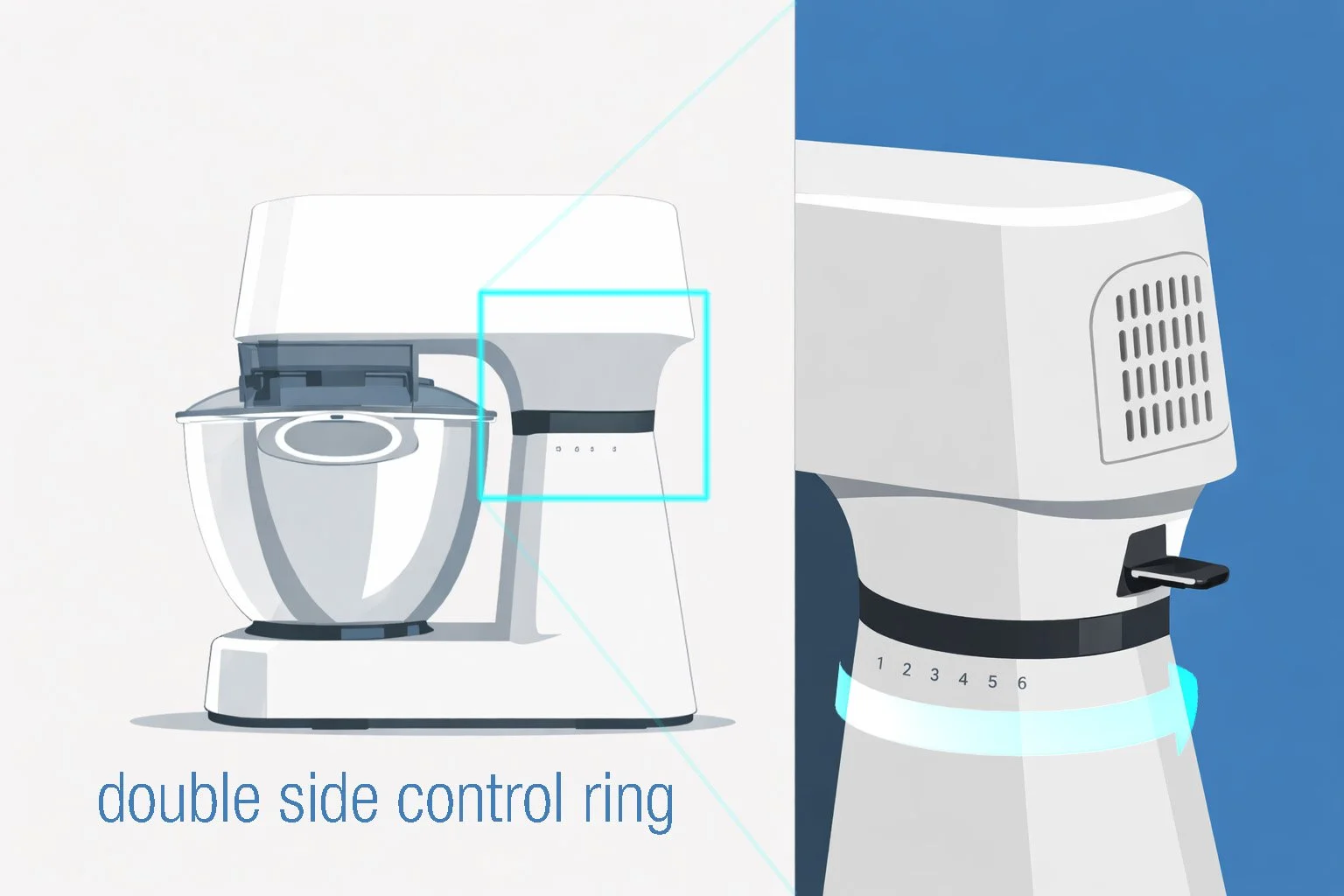
O-Mix
Ambidextrous control ring accessible from both sides.
r2: When Automation Changes the Typology
As smart locks evolved toward fully automatic systems, the traditional handle began to lose its original meaning. If unlocking is no longer mechanical but digital and automated, the classic lever is no longer structurally necessary.
This shift opened a conceptual question: what should a handle become in a fully automatic smart lock?
The answer was not to remove it, but to reinterpret it through the push–pull principle. The handle becomes a guiding interface rather than a mechanical actuator. It supports the gesture, defines the interaction and restores physical clarity in a digital product.
The selling point is not a feature added later. It is embedded in the typological evolution of the product: a push–pull smart lock designed for natural, intuitive movement in an automated context.
Here, the wow does not come from styling. It comes from coherence. The form reflects the transition from mechanical logic to automated logic. It is not decoration. It is a statement about how smart locks are changing.
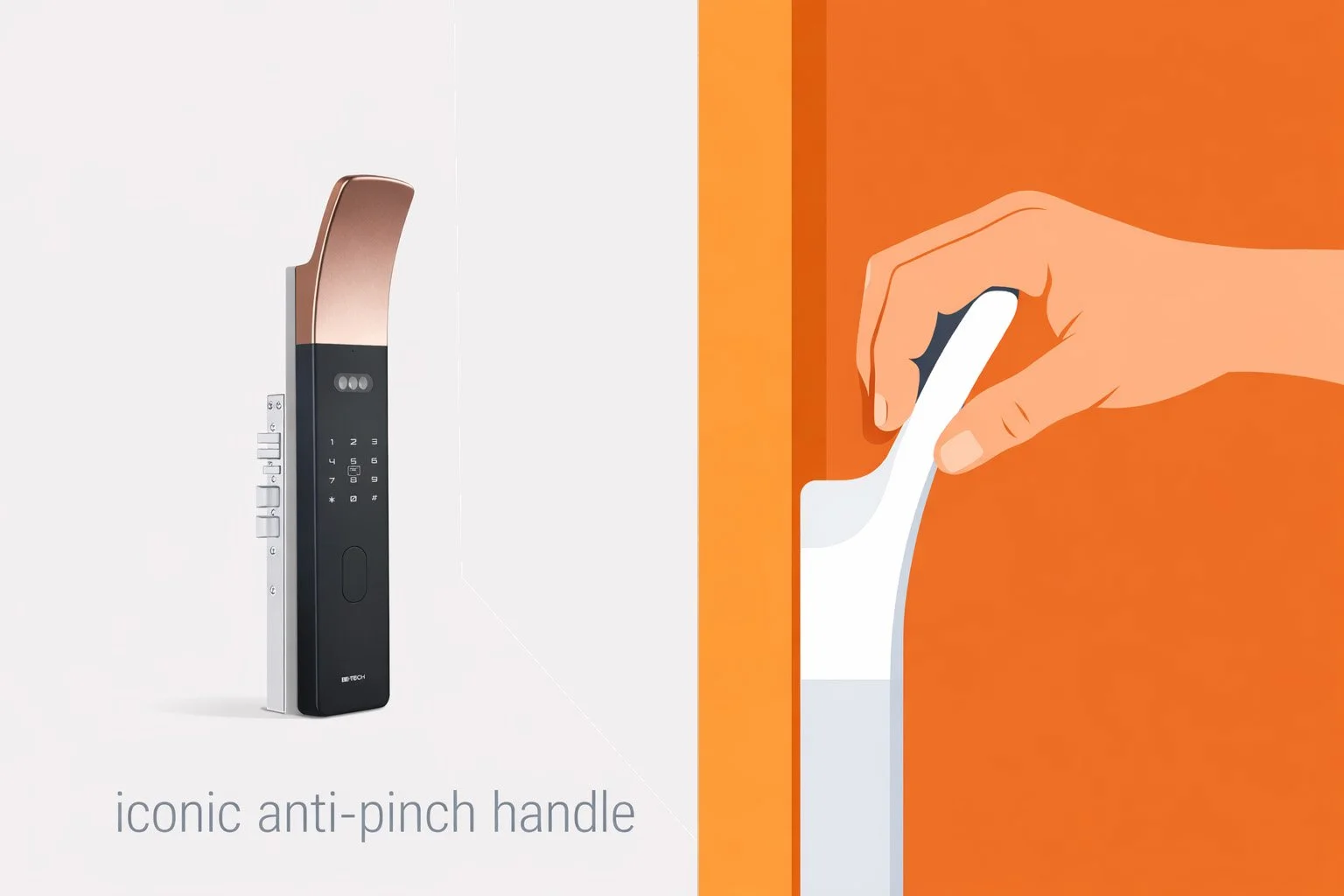
r2
Iconic “r” handle designed as the primary interaction element..
N/O: Architecture as Innovation
In many consumption-driven products, users end up replacing more than necessary. Value is discarded together with consumables. Autonomy is limited. Changing experience often requires replacing the entire device.
The concept behind N/O was to separate the system into clear modules: a reusable power unit, a 2 ml pod/atomizer, and a 10 ml tank, pre-filled or refillable. This decision redefines autonomy, flexibility and lifecycle.
The selling point is clear: more autonomy, instant flavor change, less waste—replace only what you need.
Here the wow is not visual. It is structural. It lies in the feeling that the product is intelligent. When innovation is architectural, it cannot be easily copied by adding a feature. It requires rethinking the system.
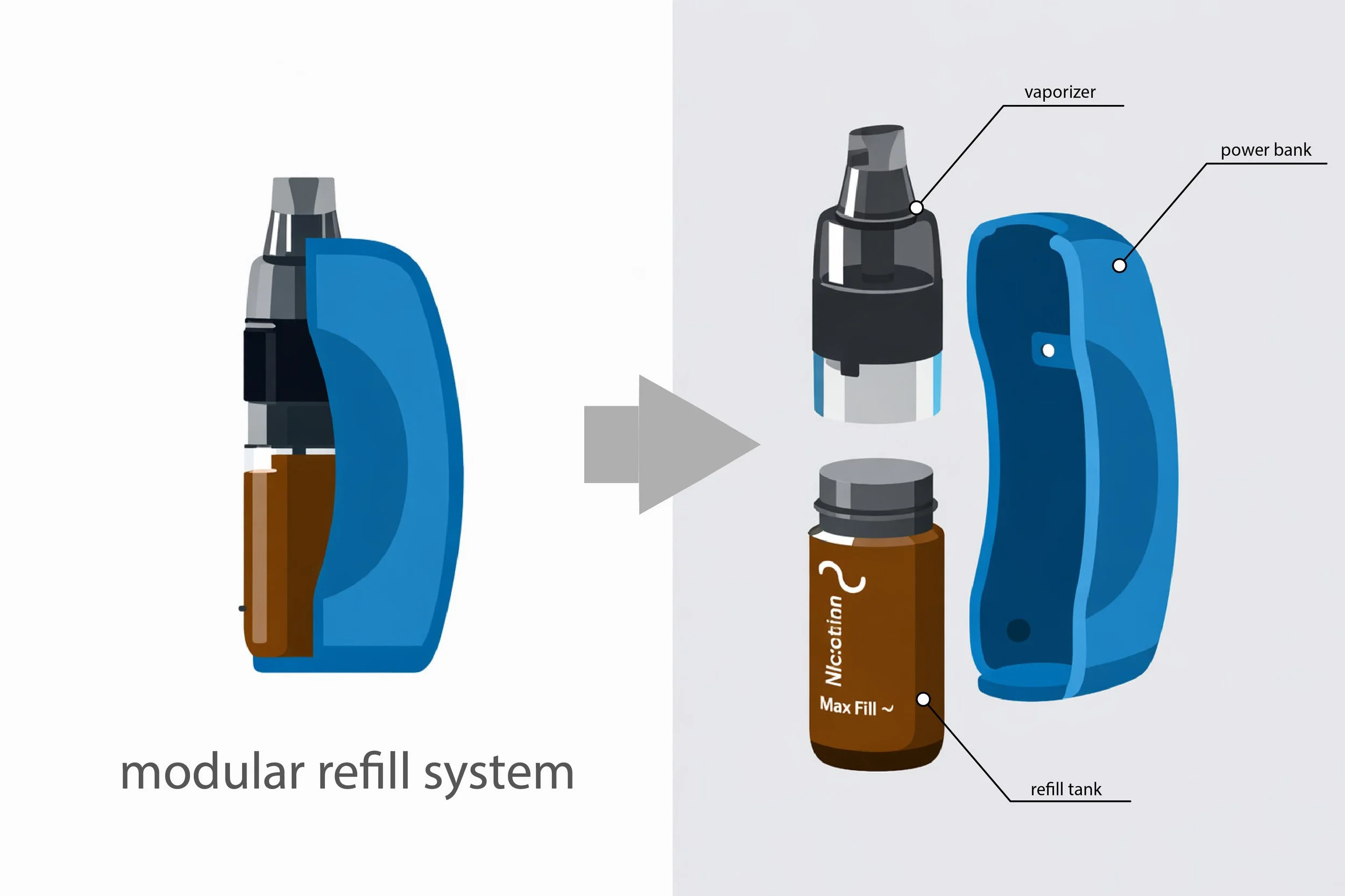
N/O
Modular refill system with reusable power unit and replaceable components.
Practical Principles Behind a Strong Concept
A few principles tend to repeat across projects.
First, a concept is not an image. It is a logic. If it cannot be explained in a few clear sentences, it is probably not focused yet.
Second, form is not decoration. It is the consequence of ergonomics, architecture, interaction and identity working together.
Third, every formal decision has implications. Sometimes economic. Sometimes related to complexity, risk, time or quality control. Nothing is neutral.
Finally, the most powerful wow is the one that survives use. The first wow captures attention. The second wow—the one experienced over time—is what drives choice and recommendation.
Why This Phase Shapes the Future of the Project
Many failures do not originate from bad ideas. They originate from ambiguity. Teams use the same words—minimal, premium, robust, innovative—while meaning completely different things.
Concept design transforms those ambiguous words into something concrete. Something that can be seen, discussed, tested and developed. It aligns meaning before development accelerates.
In that sense, it is a creative phase. But it is also a phase of clarity.
Concept design is the moment when a product becomes inevitable. Not because it is simply beautiful, but because it makes sense and offers a clear reason to be chosen.
When a concept becomes inevitable, the wow changes nature. It is no longer a special effect. It becomes evidence.
