
How REAL DESIGN works
A lesson that still holds true: from golf cart expertise to urban electric mobility.
In 2015, a company in Guangdong specialized in golf carts approached us with an ambitious idea: to explore the development of a compact electric city car starting from their existing experience.
At first glance, the request seemed to be about designing a different kind of vehicle. In reality, the project was about something deeper and more relevant from an industrial point of view. The real challenge was not simply to give shape to a small electric car, but to understand how far an existing manufacturing culture could evolve when applied to a new context.
This is often where meaningful product development begins.
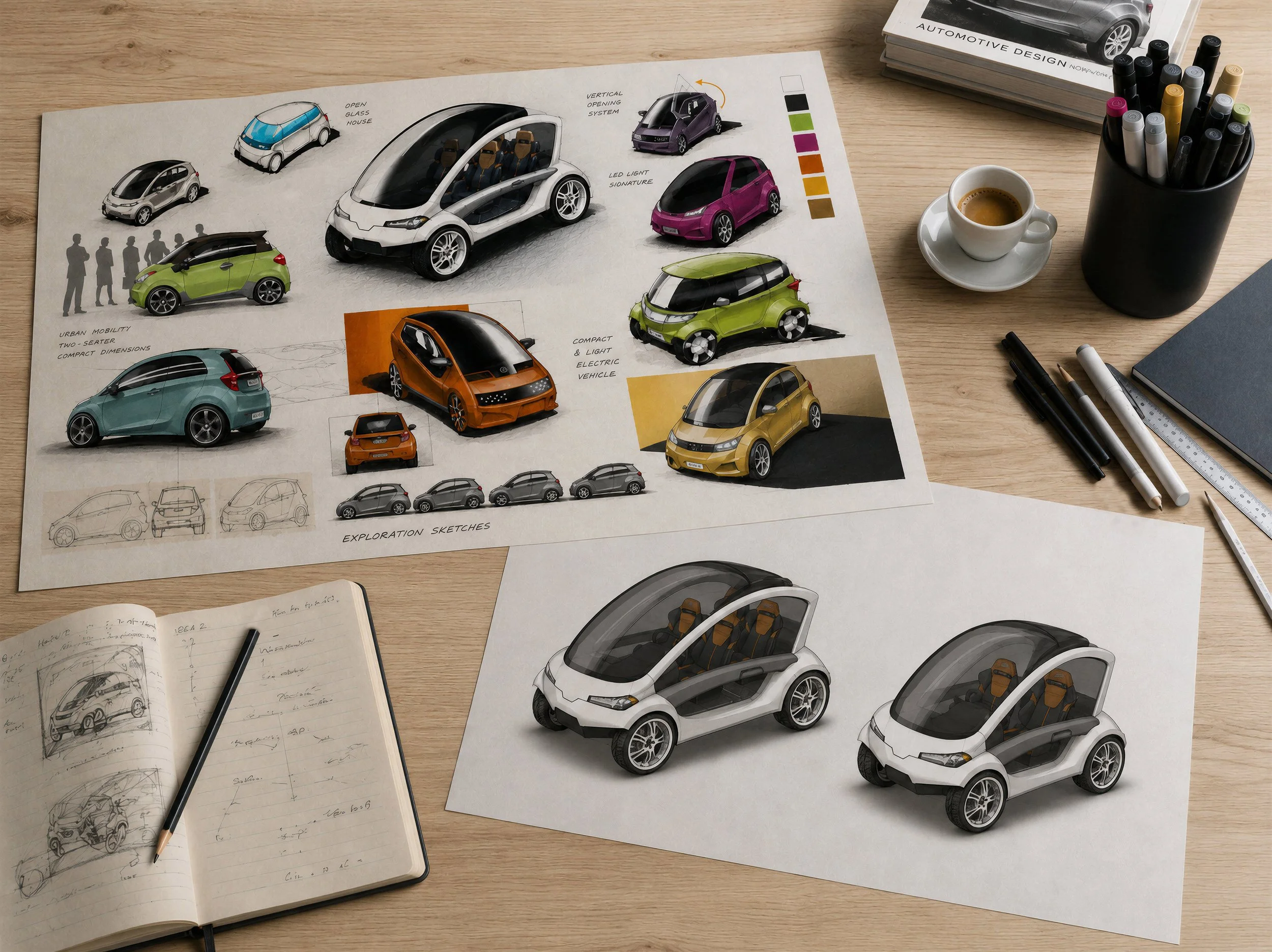
Early exploration board showing alternative directions, packaging studies and the gradual evolution of the vehicle concept.
Companies do not always need to reinvent themselves from scratch. In many cases, the most intelligent evolution comes from looking carefully at what they already know: the technologies they have mastered, the production logic they already manage, the components and architectures they understand, and the market proximity they may already have without fully realizing it. In this case, the company was already working in the field of lightweight electric mobility, even if in a more specific and limited segment. The question was whether that knowledge could be translated into something more urban, more everyday, and more closely related to a different idea of personal transportation.
That shift is never automatic.
Moving from golf carts to a compact electric city car means rethinking proportions, visual language, usability, perceived safety, and the relationship between the vehicle and the city itself. A golf cart belongs to a protected or semi controlled environment. A city car, even a very compact one, must immediately suggest a different level of legitimacy, purpose, and presence. It has to feel credible in a public and urban scenario. This means that design cannot be reduced to styling alone. It must work as a tool to reframe the company’s industrial identity and make that new direction visible.
The early concept phase reflected exactly this tension. On one side there was the need to stay grounded in the company’s real capabilities, on the other the need to imagine a product with a broader and more contemporary urban meaning. Sketches and concept explorations were not there to decorate an idea that had already been decided. They were part of the process of testing how far the brief could be pushed without becoming abstract or unrealistic.
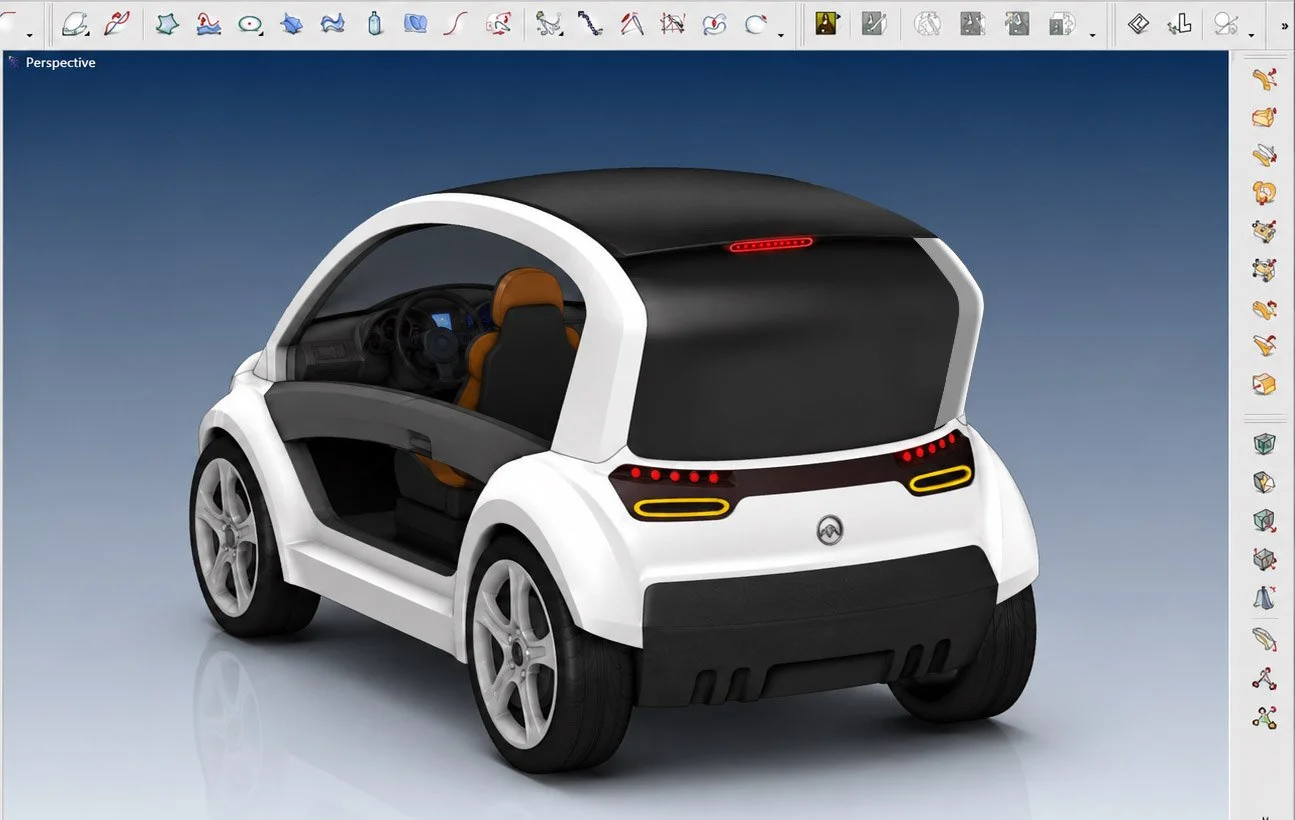
Rear three quarter CAD view of the concept during the digital development phase, where architecture, proportions and surfacing were refined.
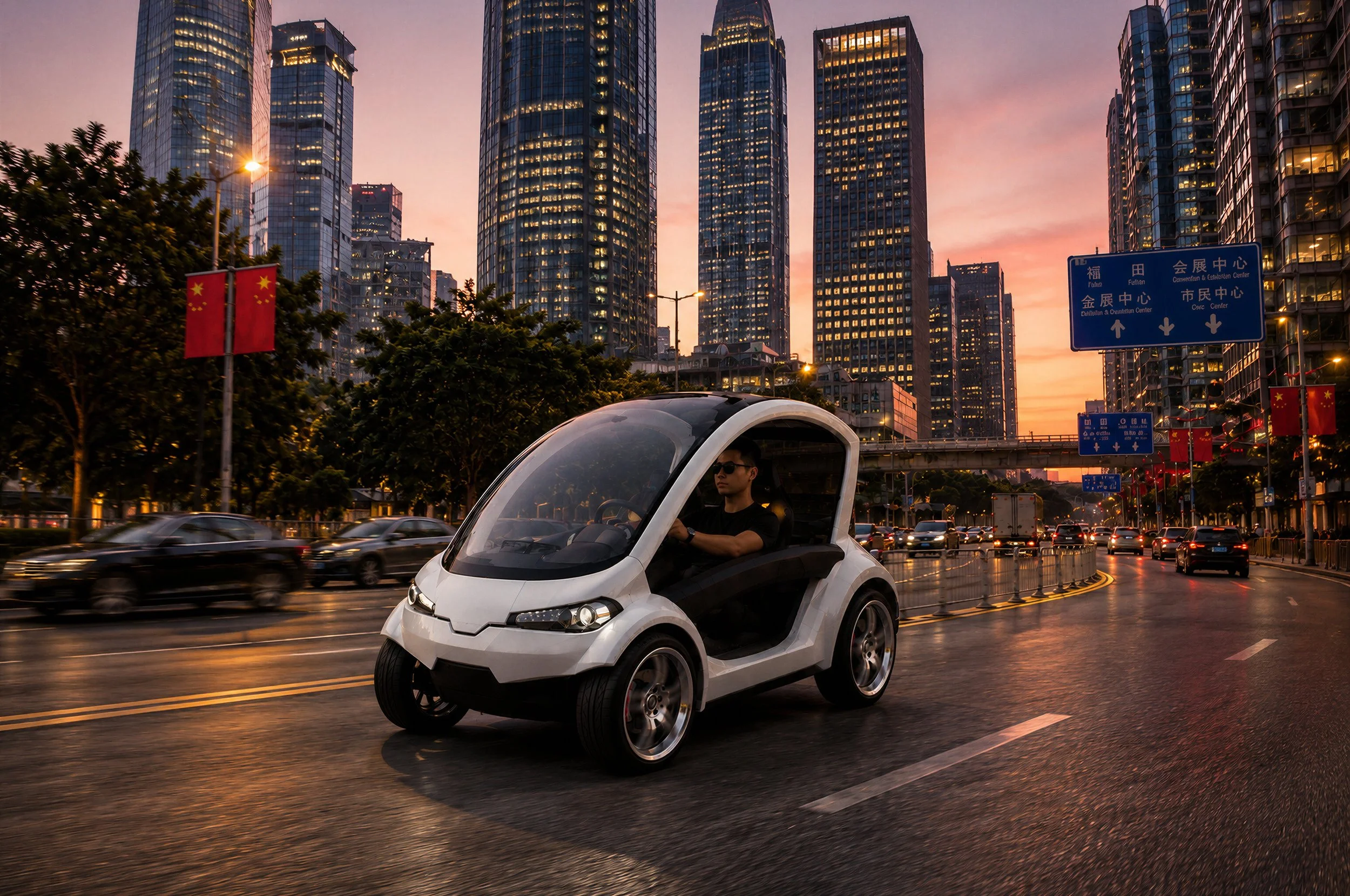
Urban scenario render used to place the concept in its intended context and test its visual credibility in everyday mobility.
This is one of the reasons why we often say that REAL DESIGN is not about categories.
A designer should not be trapped inside predefined product families, nor should a company assume that innovation only happens by entering completely unfamiliar territories. What matters is the ability to transfer method, intelligence, and industrial logic from one field to another without losing credibility. Eclecticism, in this sense, does not mean doing everything. It means being able to read a production system, understand its potential, and transform it into a new product vision that still makes sense.
That is what made this project interesting to us then, and still meaningful today.
It was not a fantasy exercise about future mobility. It was a concrete reflection on how design can help a business see a possible next step more clearly. Not through empty innovation rhetoric, but through the disciplined transformation of existing know how into a new scenario.
When design really works, it does more than make products desirable. It helps companies understand what they could become, starting from what they already are.
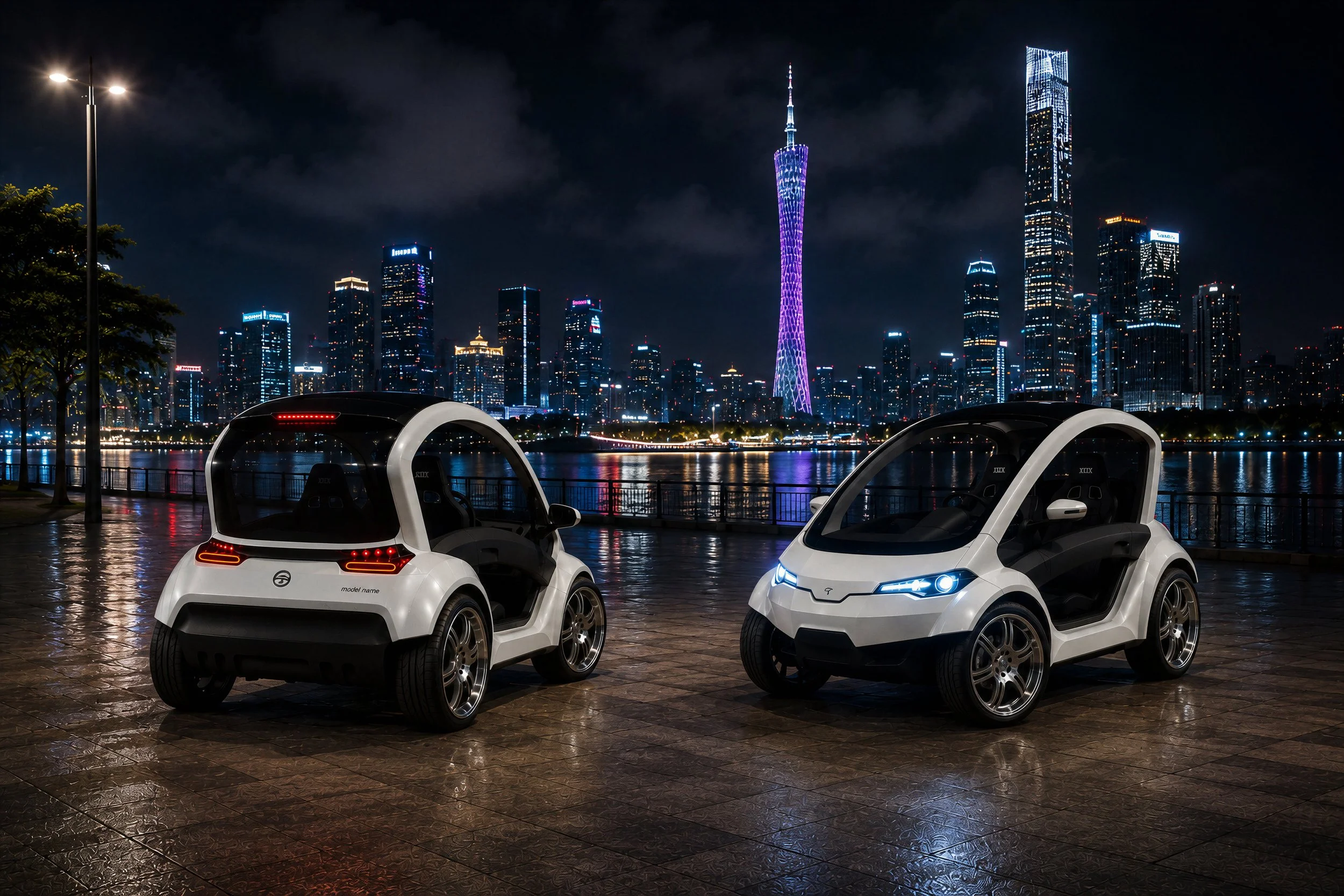
Final concept vision of the compact electric city car, developed from a manufacturer’s existing expertise in golf carts.
